Bathroom remodeling
Bathroom remodeling: A better room for every day.
Discuss your projectA bathroom is small enough that every inch has a job. The door swing, the place for towels, the distance between fixtures, and the light at the mirror can matter more than an elaborate finish. Start with the routine that the current room makes difficult.
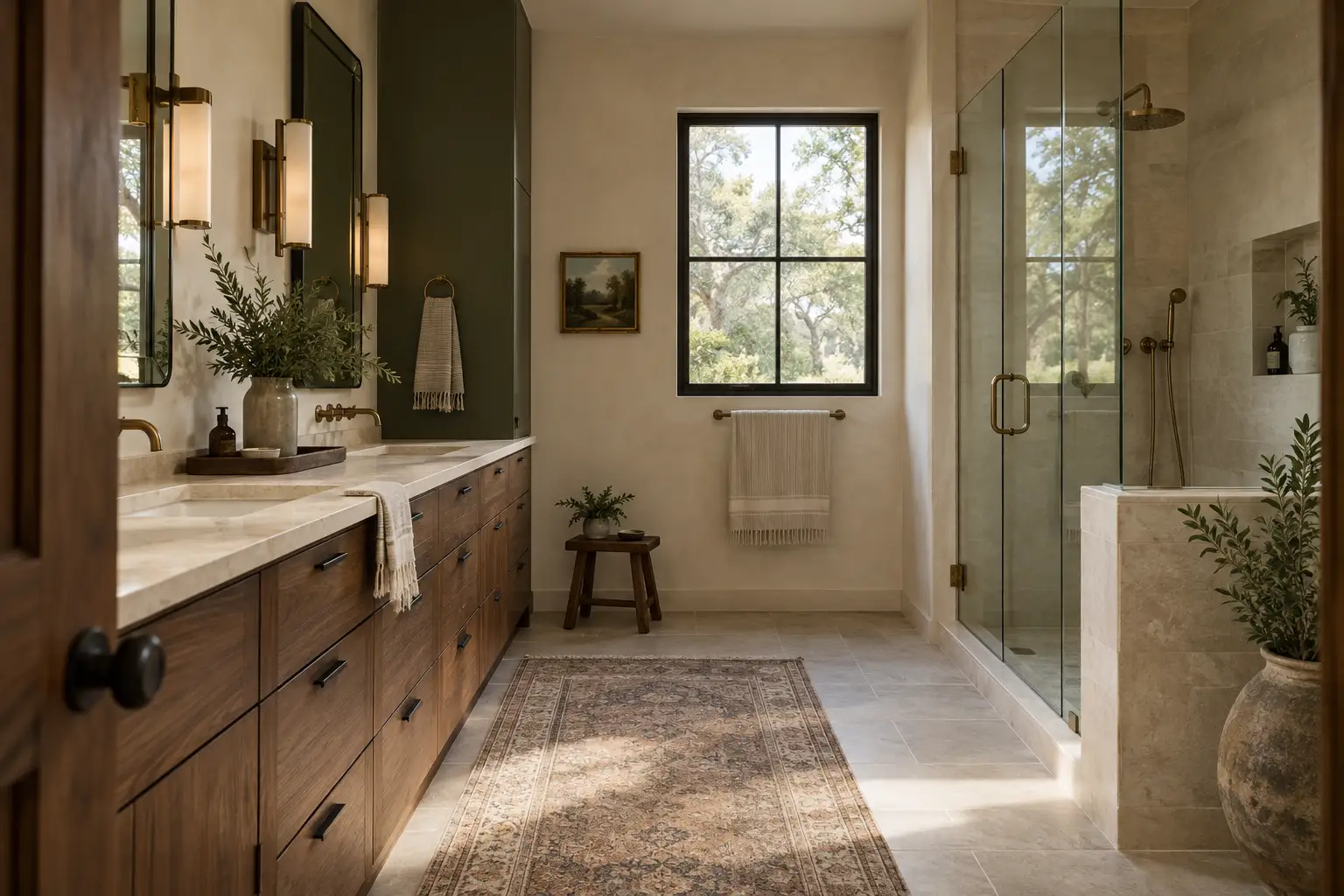
Austin Home Remodelers welcomes single-bathroom work as well as bathrooms within a broader renovation. Bring the ordinary irritations: no place to set a bag, a shower that feels cramped, or a vanity that stores almost nothing.
Explore what to considerBathroom remodeling
Solve the layout first
The useful decisions begin with the way the space is used.
Look at the room with the door open, the shower in use, and the drawers pulled out. A plan can fit on paper while feeling cramped in motion. Consider who uses the room at the same time, whether someone needs a seated spot, and whether future changes in mobility should influence clearances now.
Moving a wall or fixture can unlock space, but it also changes the work behind the finishes. Sometimes a better vanity and shower arrangement within the existing footprint is enough. Explore both ideas before treating a larger intervention as inevitable.
- Door and drawer clearances
- Storage for towels, daily products, and cleaning supplies
- Light and sight lines at the vanity and shower
Bathroom remodeling
Put storage where it is used
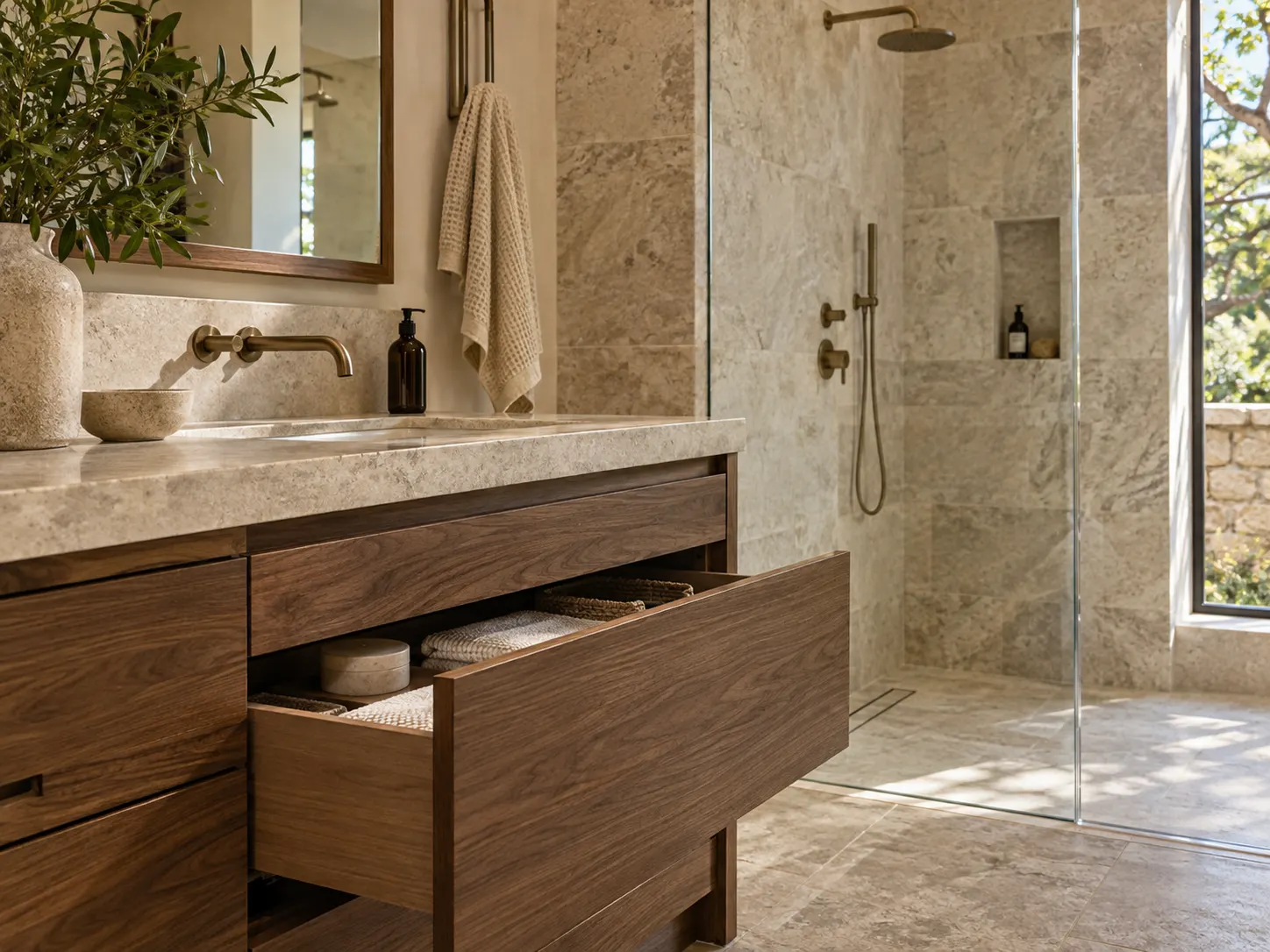
List everything the bathroom must hold. Some items belong near the sink; others can live in a nearby linen closet. That distinction may free enough room for a more comfortable vanity or shower. Open shelves look light but ask you to keep their contents tidy, so make that a conscious choice.
Think about outlets, mirrors, hooks, and ledges before the wall plan is final. These small items are often the difference between a bathroom that feels composed in a photograph and one that works before work or after a swim.
Bathroom remodeling
Choose surfaces for use and care
Tile size, grout lines, stone, and cabinet finishes affect both appearance and cleaning. Ask how each surface behaves around water and regular products. A textured floor may feel secure underfoot, while the same texture on a wall could be harder to wipe down. The right answer depends on the location.
Bring material samples into the room or compare them under similar light. A cool white can look harsh beside warm flooring, and a dark surface may reveal water marks more than expected. The details at corners, niches, and transitions deserve attention alongside the large fields of tile.
Bathroom remodeling
What changes the scope and cost
Fixture moves, waterproofing, ventilation, damaged substrate, custom cabinetry, and finish selections can all change the work. Existing conditions may only become clear when a wall or floor is opened. Ask which conditions have been inspected and which remain unknown, especially behind the shower and below the floor.
A useful proposal describes the room you will actually receive: what is included behind the visible finish, which fixtures are specified, and who is making each selection. If this is the only working bathroom, explain that at the beginning so the discussion includes how your household would manage during the work.
Bathroom remodeling
Start with a few useful facts
Photograph the room from the doorway and each corner. Measure roughly, note where water or storage is a problem, and list the changes that would make your morning easier. If several people use the room, ask each what is inconvenient. Their answers may point to different layout needs; inspiration images can then help explain the desired finish.
If the bathroom relates to a bedroom, closet, or pool route, show those connections too. The best change may be just outside the existing room. We can discuss the intended scope without assuming that every neighboring space has to be remodeled.
Your questions
Before the first conversation.
Every home asks for its own answer. These are useful places to start.
Should the tub stay?
Start with who uses it and how often. Then consider the household's needs, available space, and what a shower or tub change would require in this specific room.
Does a larger tile mean less maintenance?
Fewer grout joints can change cleaning, but tile material, finish, installation detail, and the products you use also matter. Review the full surface choice rather than tile size alone.
Can we add more storage without expanding?
Often the first move is to inventory what needs to stay in the bathroom. A different vanity layout or nearby linen storage may help, though the available space and existing conditions determine what fits.
What should be settled before choosing finishes?
Confirm the layout, fixture sizes, lighting needs, ventilation approach, and places for storage. Those choices give the finish plan useful boundaries.