Historic restoration
Historic restoration: Keep what gives a house its character.
Discuss your projectAn older house can be loved for reasons that do not appear on a floor plan: the depth of a window, worn wood underfoot, a porch that holds the street at a comfortable distance. Those qualities deserve to be identified before new work begins.
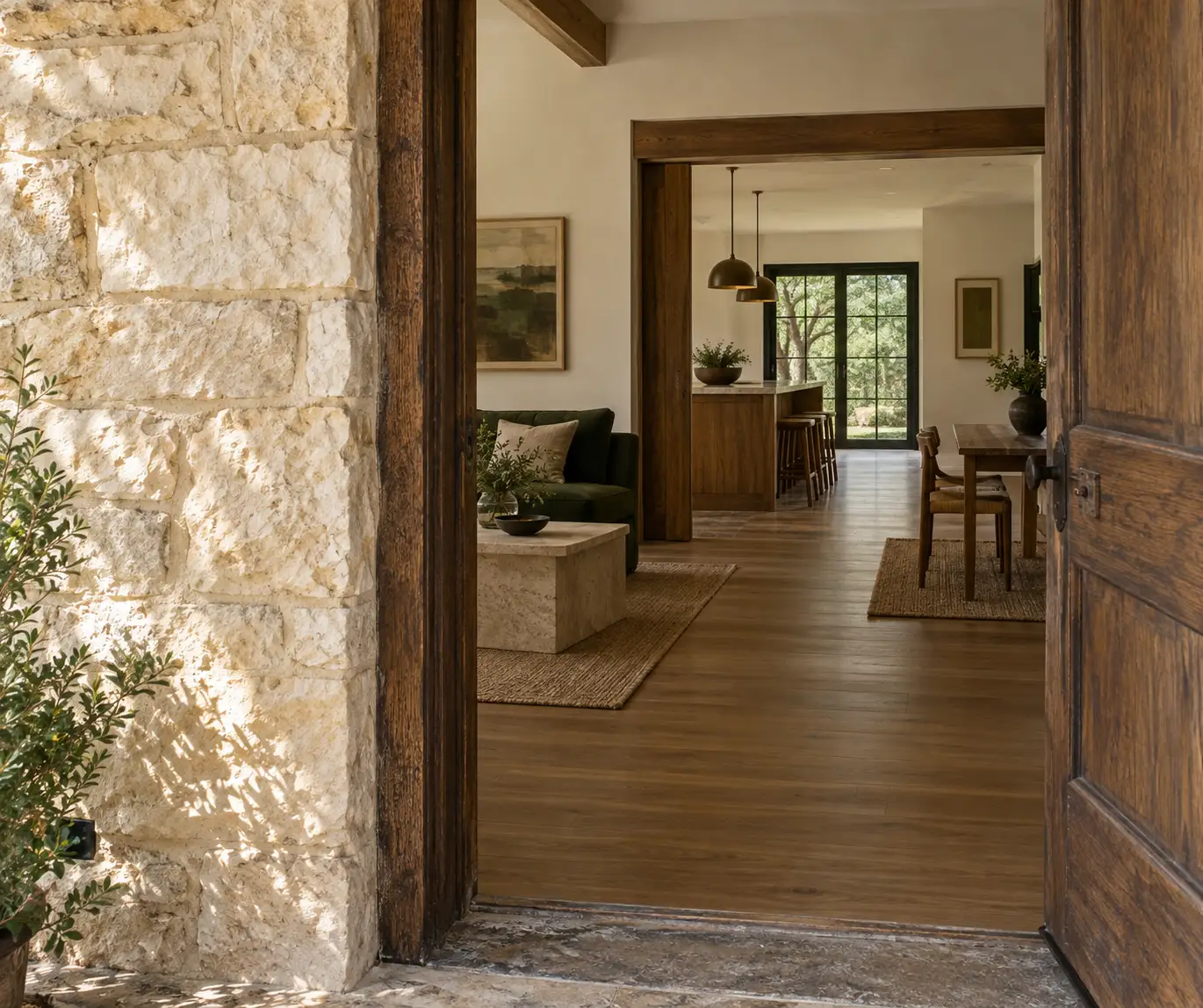
Historic restoration is a careful planning conversation, not a promise that every element can or should be kept. We welcome projects that range from a focused intervention to a wider renovation. The first task is to understand the house and what you want it to do now.
Explore what to considerHistoric restoration
Document before deciding
The useful decisions begin with the way the space is used.
Photograph the rooms, exterior, and details you care about. Record what appears original, what has been changed, and where repairs may be needed. A later addition can be valuable too; age alone does not determine whether something should stay.
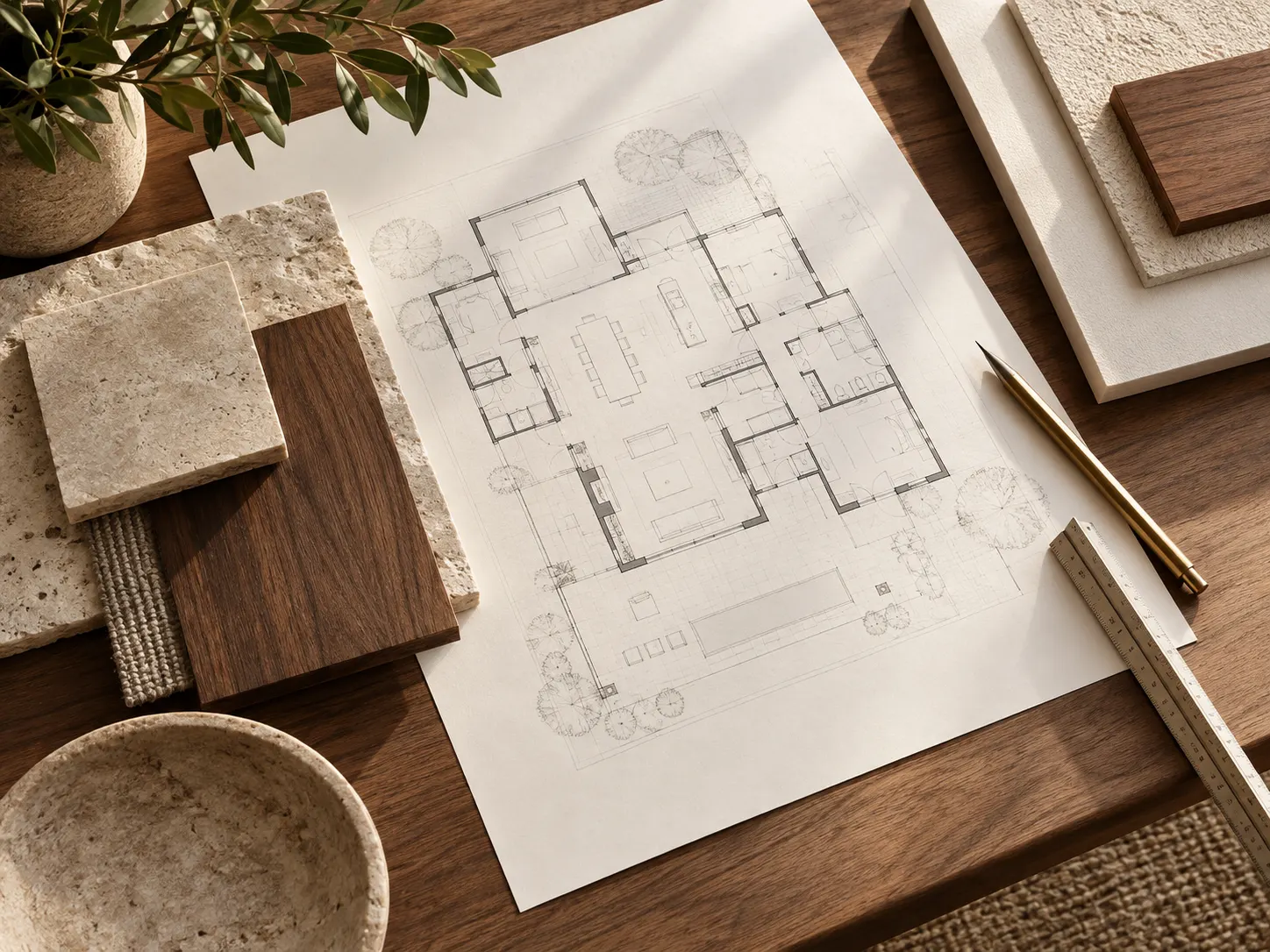
Look beyond decorative details. Room proportions, the rhythm of windows, a stair position, and the route from the street to the front door may carry more of the home's character than an isolated piece of trim. Mark these relationships on a plan before testing new layouts. Ask whether the house has a room that still feels right even though it is worn. That room may give you a better design reference than a newly built house in an inspiration folder.
- Details and spaces you want to preserve
- Known repairs and uncertain conditions
- Changes that would improve everyday use
Historic restoration
Make new uses fit the old structure
A modern kitchen or bathroom can serve an older home without pretending it was built at the same time. The challenge is to find a respectful place for new services, storage, and circulation. Large openings may improve one view while erasing the room scale that made the house appealing.
Test smaller moves as well as dramatic ones. A better doorway, a clearer storage plan, or a carefully placed addition may resolve the daily problem while leaving the strongest spaces intact. The right level of change depends on the building and the household. A family that cooks together may need a different kitchen relationship than the original plan provided, while still caring deeply about the hall or porch that defines the house.
Historic restoration
Investigate condition honestly
Older buildings can hold surprises behind finishes and below floors. Before promising a precise intervention, identify what has been inspected and what remains unknown. Existing windows, masonry, framing, and mechanical systems may need specialist evaluation to determine what can be retained or repaired.
If the property may be subject to preservation review or other project-specific requirements, verify that with the relevant authority and qualified professionals for the address. A style that looks historic does not by itself tell you what legal status or review path the home has.
Historic restoration
Choose a clear relationship between old and new
New materials can complement the house without copying every old detail. A restrained junction often lets original work remain legible. Compare samples in the existing light and ask where finishes meet: at a floor transition, window return, or edge between old and new walls.
Repair, reuse, and replacement have different costs and outcomes. A budget should identify which elements are planned to stay, which require evaluation, and which are assumed to be new. Avoid choosing a finish palette before those decisions are understood. If new work meets an old surface, document the joint itself. A thoughtful transition can make the difference between an intentional intervention and an accidental patch.
Historic restoration
Start with what you love
Bring photographs, any old or current plans, and a list of spaces you would be disappointed to lose. Include the practical complaints too. A house can be both worth preserving and difficult to live in; the design should take both facts seriously.
We can discuss a focused room, an addition, or a broader plan. The useful first outcome is a shared record of the features to protect, the changes to test, and the conditions that need investigation before a design promise is made.
Your questions
Before the first conversation.
Every home asks for its own answer. These are useful places to start.
Does an old-looking house automatically have historic restrictions?
No conclusion follows from appearance alone. Check the actual property and proposed scope with the authority that reviews it before relying on a particular process.
Can a new kitchen belong in an older house?
Yes. The question is how the new layout and materials affect the rooms, circulation, and details you value. A respectful solution does not have to copy old features literally.
Can a small restoration project be discussed?
Yes. A focused intervention is welcome. Tell us which element or room matters and what problem it needs to solve.
Should every original feature be kept?
That depends on condition, use, and what gives the house its character. Document first, investigate where needed, and make retention decisions deliberately.
Why are early budgets uncertain?
Some conditions are concealed until investigation. A useful scope distinguishes inspected facts, preservation goals, repair assumptions, and open decisions.